 Agriculture
 Aerospace and Defence Motors
 Industrial Motors
 Material Handling & Off Highway
 Automotive
 Wiring Harness
 IoT/SCADA
 AI/ML
Rack Fiber Management System (FMS) – 24F / 48F / 96F / 144F
Product Overview
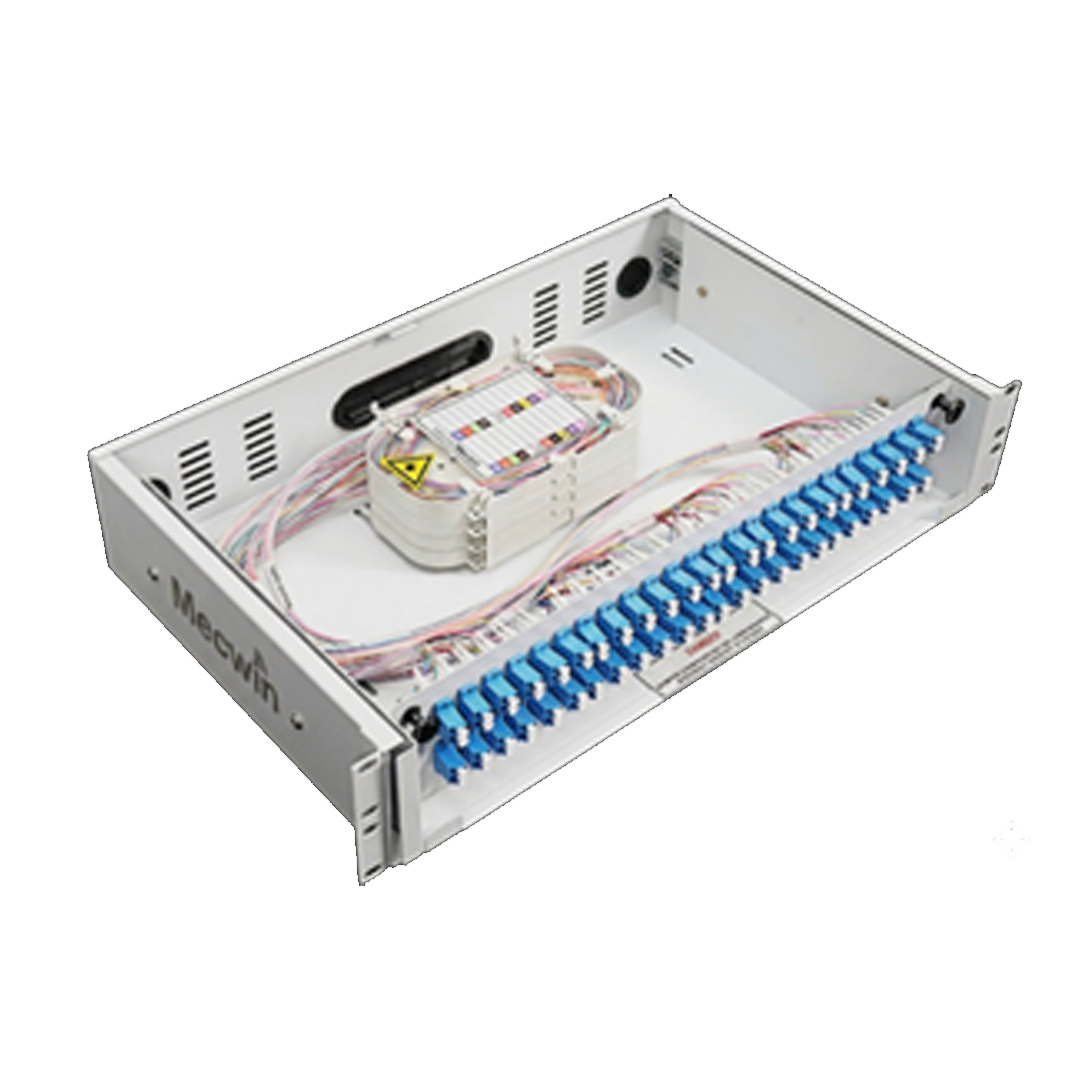
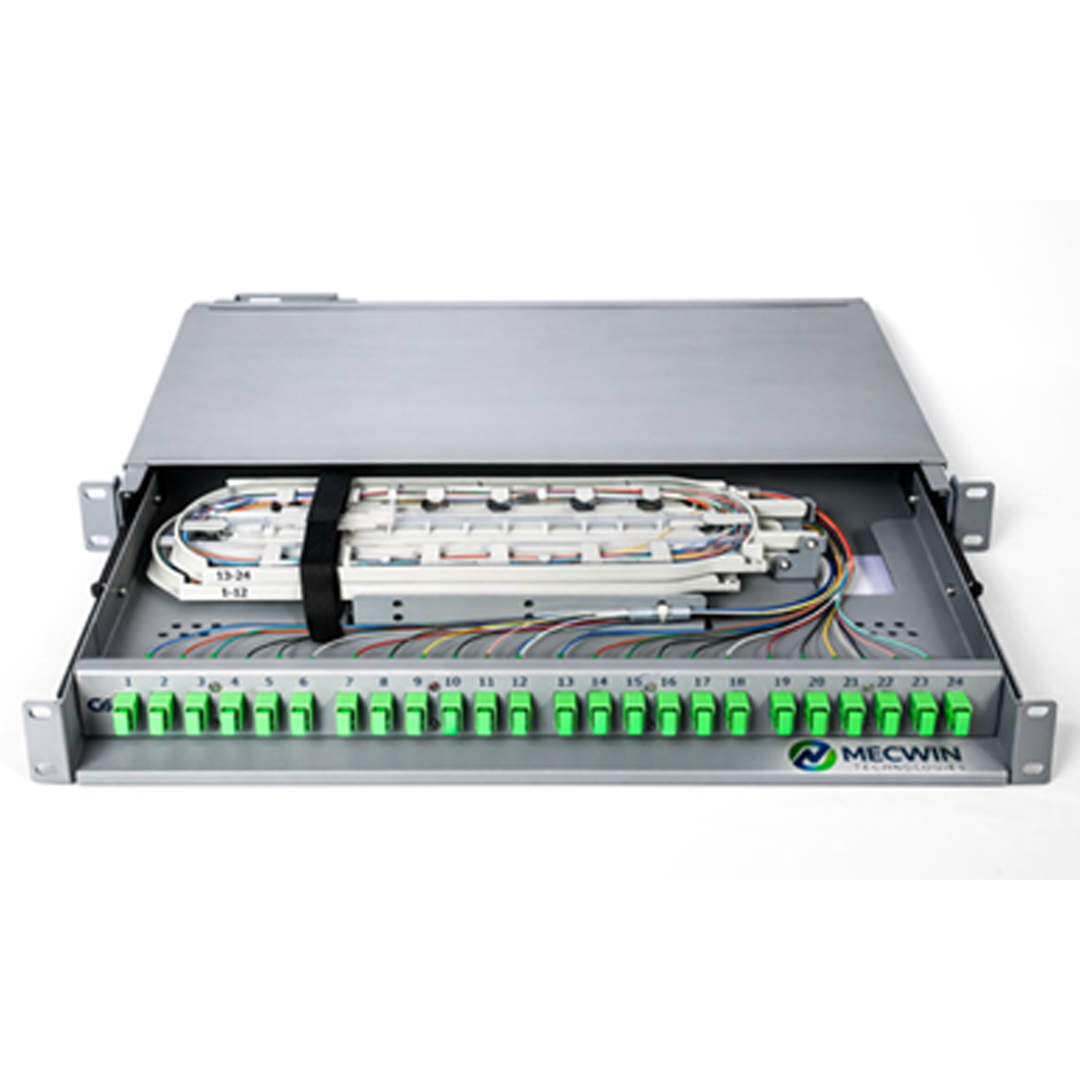
The Rack Fiber Management System (FMS) is designed for efficient fiber optic cable organization, protection, and management in telecom and networking environments. It supports multiple fiber capacities and provides a flexible, secure, and user-friendly solution for FTTH and enterprise applications.
Key Features
- Constructed from high-quality cold rolled steel sheet for durability and long life
- Available in multiple capacities: 24F, 48F, 96F, 144F
- Flexible cable entry system with 1–2 cable entry ports and multiple fiber exit options
- Cable entry ports sealed with oil-resistant NBR rubber for enhanced protection
- Customizable entry/exit points (can be pierced as needed)
- Stackable fiber splicing trays for easy expansion and organization
- Separate grounding/earthing unit for safety
- Designed for easy installation, maintenance, and scalability
- Secure fiber routing ensures minimal signal loss and maximum protection
Technical Specifications
| Parameter | Specification |
| Model Variants | 24F / 48F / 96F / 144F |
| External Dimensions (L × W × H) | 24F: 430 × 250 × 1U 48F: 430 × 250 × 2U 96F: 430 × 250 × 3U |
| Weight | Approx. 3.5 kg |
| Fiber Capacity (per tray) | Up to 12 cores per tray |
| Total Capacity | Up to 144 cores (model dependent) |
| Minimum Fiber Bend Radius | ≥ 40 mm |
| Fiber Length Storage | Approx. 1.5 m per tray |
| Operating Temperature | -40°C to +60°C |
| Lateral Pressure Resistance | 500 N |
| Shock Resistance | 750 N |
Installation Instructions
-
Cable Preparation
o Strip outer and inner sheatho Remove loose tube and clean filling gelo Leave 1.1–1.6 m fiber and 20–40 mm steel strength member
-
Fiber Routing
o Guide fiber into splicing trayo Secure using heat shrink tubes
-
Splicing
o Perform fiber fusion splicingo Protect joints using heat shrink sleeveso Place joints securely in tray slots
-
Fiber Management
o Arrange fibers neatly in trayo Secure with nylon tieso Stack trays from bottom to top
-
Final Setup
o Close and secure enclosureo Connect grounding wire as per project requirements
Applications
- FTTH (Fiber to the Home) networks
- Telecom infrastructure
- Data centres
- Enterprise LAN/WAN systems
- Power utilities and industrial networks
Industry Benefits
- Reliable and organized fiber management
- Easy scalability for growing networks
- Enhanced safety with grounding provision
- Reduced maintenance time and cost
- Suitable for harsh environmental conditions
Customization Note
Products can be manufactured with the latest technologies and tailored specifications similar to advanced industry standards Mecwin-type designs depending on project requirements.